

Product description
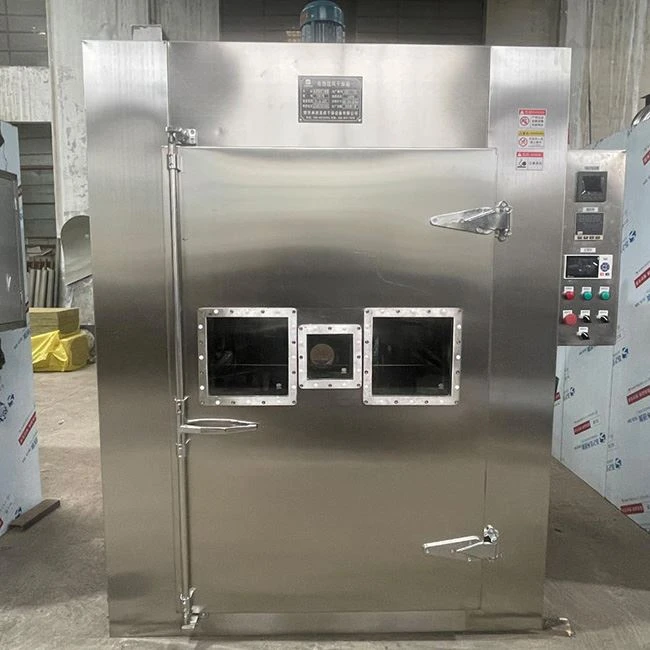
The steam heating oven uses steam from a boiler or central steam network as the heat source. Steam passes through a heating coil or heat exchanger and transfers thermal energy to the chamber air or a designated heating surface. In a typical indirect-heating arrangement, the steam circuit remains separate from the process air.
This type of oven is suitable for factories that already operate a boiler or central steam system and need controlled batch heating, drying, preheating or warming. Nanjing Ranran Tiancheng Drying Equipment Co., Ltd. supplies steam heating ovens for industrial drying and thermal processing, with chamber size, heating arrangement, air circulation and control functions set according to the workpiece and process.


Technical Parameters
| Item | Description |
|---|---|
| Heating Source | Steam, electric, far-infrared, and steam-electric dual use |
| Operating Temperature | Steam: 50–140 °C (max 150 °C); Electric / far-infrared: 50–350 °C |
| Control System | Digital meter or touchscreen; over-temp alarm & timed dehumidification; GMP compliant |
| Air Circulation System | Forced circulation by fan; horizontal/vertical ducts for uniform temperature |
| Common Steam Pressure | 0.02–0.8 MPa (0.2–8 kgf/cm²) |
| Electric Heating Power | 15 kW (Type I); practical power 5–8 kW/h |
| Special Requirements | To be specified at time of ordering |
| Temperature Range Limit | Specify when ordering if >140 °C or <60 °C |
| Drying Trolley Trays | Standardized sizes, interchangeable |
| Tray Size | 460×640×45 (mm) |
Working Principle
Steam enters the oven through the inlet assembly and flows through the heating coil or heat exchanger. As the steam releases heat, the chamber air is warmed and the loaded material is heated. Condensate formed in the heating circuit is discharged through the condensate drainage system.
Where forced circulation is specified, fans and air ducts distribute heated air through the load. For drying applications, moisture-laden air is removed through the exhaust system while fresh air is introduced as required. The heating rate and achievable chamber temperature depend on steam pressure, heat-exchanger capacity, chamber airflow, insulation and load characteristics.
Features
Steam-based heat supply: Can make use of an existing boiler or steam network instead of adding a separate primary heating source.
Indirect heating: The steam circuit is kept separate from the process air in a typical coil or heat-exchanger design.
Condensate and steam circuit design: Coil capacity, steam control valve and condensate drainage are arranged to match the available steam supply and required heating duty.
Configurable airflow: Air circulation and exhaust can be arranged to suit the product layout and drying requirement.
Process-oriented control: Temperature, steam flow and exhaust settings are managed through the configured control system.
Operating cost and heating performance depend on steam generation efficiency, steam pressure, condensate recovery, insulation, production schedule and local energy costs. These factors should be assessed when comparing steam heating with electric or gas heating.
Application
Steam heating ovens are used for:
Drying suitable industrial components and materials
Preheating parts before assembly or further processing
Warming materials during production
Drying selected products after washing or surface treatment
Batch processing in facilities with an existing steam supply
Materials sensitive to humidity, oxidation, contamination or prolonged heating require process evaluation before equipment selection. Applications involving solvents, flammable vapors or corrosive substances also require assessment of ventilation, materials of construction and safety requirements.
Hot Tags: steam heating oven, China steam heating oven manufacturers, suppliers, factory, Electric Drying Oven, industrial vacuum drying oven, Mesh Belt Drying Oven, Natural Gas Drying Oven, Tabletop Blast Drying Oven, Wheel Curing Oven


